Animal cruelty has been entrenched in societal shadows, often resembling a malevolent specter that haunts the compassionate. The insidious nature of this crime manifests in diverse forms — from neglect to flagrant abuse. Amidst a burgeoning outcry for justice, legal reforms have emerged as a beacon of hope, prompting a critical question: Do increased penalties truly serve as a deterrent to such heinous acts?
Within the realm of animal welfare, legal frameworks play a pivotal role, akin to the sturdy scaffolding of a grand architectural feat. Just as architects meticulously design buildings to endure the tests of time and weather, lawmakers craft statutes intended to protect the most vulnerable among us. Recent legal initiatives have ratified penalties for animal abuse, positioning them as a fortification against cruelty. However, the efficacy of these reforms warrants comprehensive examination.
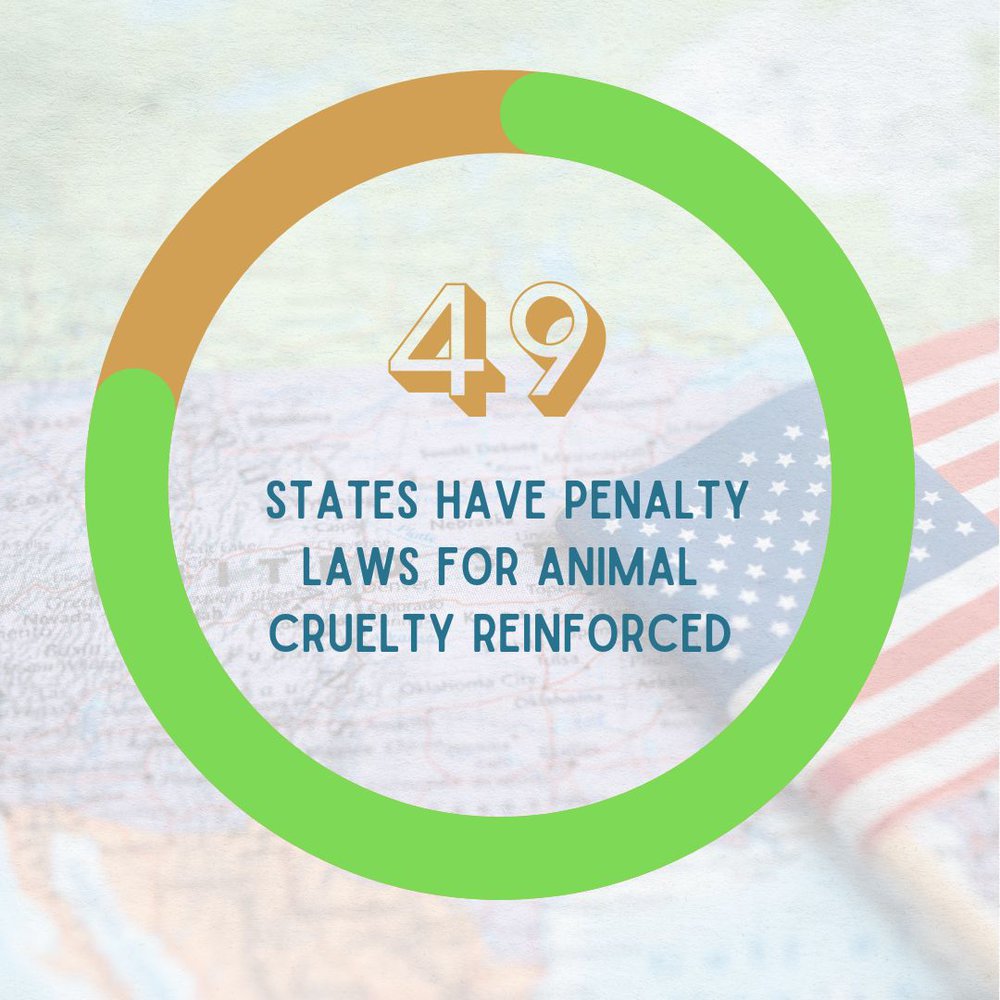
Historically, animal cruelty laws were akin to flimsy shields—often overly lenient, allowing for a plethora of offenses to go unpunished. The evolution we observe today, where 49 states now enforce stricter penalties, marks a significant legislative metamorphosis. Yet, one must ponder: does merely raising the stakes deter potential offenders, or does it merely serve as lip service to an issue that requires greater introspection?
The notion of deterrence is interwoven with psychological principles. A criminal, when faced with a potential consequence, may weigh the risks versus the rewards. Increased penalties may create an illusion of greater deterrence, akin to a lion’s roar that reverberates through a savannah, warning of its might. Yet, there exist myriad complexities underlying human behavior, prompting us to question the efficacy of fear-based deterrence alone. Does a harsher penalty genuinely prevent an individual who is predisposed to violence from acting upon their impulses? The answer remains elusive.
To evaluate the impact of legal reforms, we must survey comparative studies analyzing cases before and after the implementation of increased penalties. Preliminary research suggests a nuanced relationship between harsher punishments and actual reductions in recidivism rates among offenders. In certain urban locales, increased penalties seemingly correlated with a short-term decline in reported cases of animal cruelty. This might suggest that, indeed, the roar of legislative reform has garnered attention.
However, an intriguing counter-narrative emerges when considering rural areas where cultural attitudes toward animals often differ starkly from urban ideologies. In these communities, feral dogs may be viewed as nuisances rather than beings deserving of protection. Here, even substantial penalties might resonate as distant thunder — heard but not heeded. Effective enforcement in these regions requires more than punitive measures; it necessitates an educational renaissance that nurtures empathy towards animals, transforming attitudes from apathy to advocacy.
The power of education cannot be understated. Legislation devoid of public consciousness acts like a ship without a compass, drifting aimlessly in a sea of ignorance. Reforms that incorporate educational initiatives, outreach programs, and community engagement tend to breed a more profound understanding and respect for animal rights. Such strategies build a cultural edifice, wherein consequence aligns with morality, fostering a society that actively opposes cruelty.
Moreover, the judicial system must also embrace a more holistic approach to addressing animal abuse. Merely punishing offenders without an integrative rehabilitative process can result in a cyclical pattern of violence, akin to a treadmill on which offenders remain perpetually ensnared. Courts should consider alternative sentencing that combines penalties with educational classes on empathy and responsible pet ownership. This dual approach may facilitate a transformative experience, allowing offenders to confront the roots of their behavior rather than simply enduring the punitive measures.
Further complicating the discourse is the role of animal advocates who tirelessly champion stricter penalties at local, state, and federal levels. Their efforts are not misguided; rather, they serve as vital punctuation in a narrative fraught with indifference. Advocacy groups often act as the canaries in the coal mine, highlighting the systemic issues plaguing animal welfare. Nevertheless, these advocates must remain vigilant, ensuring that legal reforms evolve in tandem with cultural shifts, lest they become ensnared in bureaucratic inertia.
We must also consider the financial implications of enforcing stricter animal cruelty laws. Increased penalties necessitate increased resources for law enforcement agencies, which must grapple with existing budgetary constraints. that could impede proper investigation and prosecution of cases. The creation of specialized units trained to address animal welfare can be a proactive stride, yet it demands both public and political support.
In conclusion, while the implementation of increased penalties for animal cruelty serves as a significant stride towards justice, it is but one cog in a much larger machine. To truly dismantle the cycle of cruelty, we must illuminate the path forward with comprehensive reforms that intertwine legal repercussions with educational initiatives and community outreach. Ultimately, as we strive to create a world where compassion reigns supreme, every roar—whether legislative or social—must harmonize to forge a society where animal cruelty no longer flourishes in the shadows, but is instead banished to the annals of history.