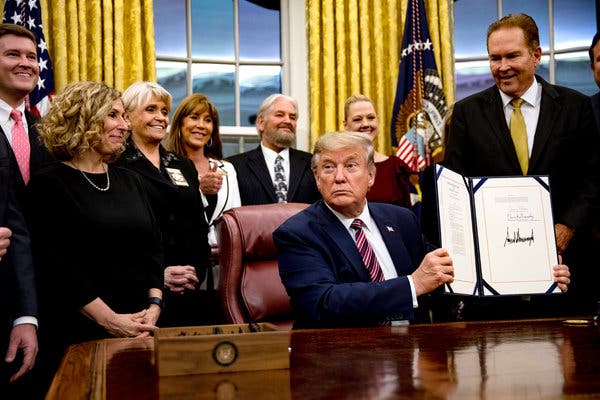
Animal cruelty remains a pressing issue globally, a subject that transcends political boundaries and elicits passionate responses from various factions of society. In the convoluted tapestry of American politics, President Donald Trump’s tenure saw the introduction of several legislative measures, one of which was the Federal Animal Cruelty Bill. This law marked a significant milestone in the fight against animal cruelty at the federal level. Yet, in the maze of his speeches and public addresses, one may wonder: Did Trump articulate a substantive viewpoint on animal welfare beyond this legislative achievement? An exploration into his statements reveals a mixed narrative.
At its core, the discussion surrounding animal cruelty necessitates a robust examination of presidential rhetoric and action. While the Federal Animal Cruelty Bill garnered attention, the overarching question of whether it signifies a genuine commitment to reducing animal suffering remains debatable. By juxtaposing Trump’s statements with broader societal concerns about animal rights, one can uncover a multi-layered perspective on his engagement with the issue.
Initially, it is essential to understand the context in which Trump addressed animal cruelty. His administration’s focus on deregulation and business-driven policies often overshadowed discussions about animal welfare. In an age where environmental concerns intertwine with ethical considerations about animal treatment, the limited discourse on these subjects in presidential debates and addresses is troubling, if not indicative of a larger societal ambivalence.
Nevertheless, Trump did spotlight animal cruelty on occasion, albeit within a broader narrative. His speeches often tended to gravitate towards law and order themes, appealing to an audience that values the enforcement of laws as a fundamental principle. In the case of the Federal Animal Cruelty Bill, he emphasized the necessity of legislative action to protect helpless creatures from willful harm. This sentiment resonates universally, as it taps into the innate compassion that many share for animals, aligning with a fundamental moral tenet of protecting the most vulnerable.
Yet, the phrasing of Trump’s addresses often lacked the emotional depth and conviction exhibited by ardent animal activists. There is a palpable disconnect when one examines the stark contrast between his proclamatory promises on enforcement and the nuanced, empathetic arguments crafted by those who dedicate their lives to this cause. Activists contend that true commitment extends beyond the passage of legislation; it burgeons from a deep-seated understanding of systemic issues surrounding cruelty, necessitating comprehensive reforms in various sectors, from farming to entertainment.
Moreover, Trump’s administration faced criticism surrounding regulatory rollbacks, which directly impacted animal welfare. Policies that relaxed restrictions on industries known for their exploitative practices prompted apprehension among animal rights advocates. This duality in approach — advocating for a bill while simultaneously undermining regulations designed to protect animals — indicates a complex interplay of motives that is essential for understanding the broader implications of presidential discourse on animal rights.
In light of this ambivalence, it is crucial to analyze public reception to Trump’s statements. Observers often note how messages about animal cruelty are frequently received through a partisan lens, influencing how individuals perceive the sincerity and efficacy of such addresses. For animal activists, a cursory mention in a speech may not suffice; they seek comprehensive reforms and consistent advocacy. Thus, while Trump’s rhetoric might align with popular sentiments at face value, it raises questions about authenticity and accountability.
The fascination with animal cruelty, particularly in the context of political rhetoric, reflects deeper societal values. Animals often serve as mirrors to our humanity; thus, how we treat them reveals prevailing attitudes towards compassion, justice, and ethics. The political discourse surrounding animal welfare is not merely a reflection of isolated policies but a broader commentary on societal morals. Therefore, while Trump did entertain the subject of animal cruelty within certain parameters, it is the underlying implications of such discussions that warrant a more critical examination.
This intricate mesh of politics, ethics, and compassion encapsulates a universal challenge: how to effectively garner support for animal welfare in a climate often dominated by competing interests and narratives. For advocates, the work extends far beyond mere legislative victories; it entails fostering a culture of empathy and understanding, one that transcends partisanship and mobilizes diverse groups towards a common cause.
As we scrutinize the complexities inherent in presidential statements on animal welfare, it becomes increasingly clear that legislation is merely the tip of the iceberg. Genuine change necessitates a sustained and multifaceted dialogue — one that engages citizens, policymakers, and advocates alike. Ultimately, the quest to mitigate animal cruelty transcends individual actions; it calls for a collective awakening to the ethical responsibilities shared by all members of society.
The evaluation of Trump’s statements on animal cruelty highlights an essential truth: while political figures can facilitate change through legislation, it is societal engagement and advocacy that will ultimately dictate the trajectory of animal welfare. As such, the role of the individual in the fight against cruelty cannot be understated. Each voice has the power to effect change, fostering an environment where empathy reigns supreme and compassion guides our interactions with all living beings.